Why Is My Floor Sagging? Common Causes in Old Richmond Rowhouses
If you own a historic rowhouse in Richmond, you may have noticed your floors aren't quite level anymore. That slight dip when you walk across the room, or the way doors don't close quite right, are telltale signs of a sagging floor. The problem is rarely cosmetic, and it almost always points to structural issues beneath the surface that deserve immediate attention.
Old Richmond rowhouses, many built in the 1800s and early 1900s, were constructed with wood framing systems that have been supporting weight for over a century. The primary culprits behind sagging floors are failing floor joists, wood rot, settlement, and moisture damage. Floor joists are the horizontal beams that support your subfloor and everything on top of it. When these joists weaken, bend, or rot, the floor loses its structural support and begins to sag. Unlike a new home with engineered lumber and modern building codes, older rowhouses often contain dimensional lumber that has degraded over time or been compromised by water intrusion and pest damage.
Wood Rot and Moisture: The Silent Destroyers of Floor Joists
Wood Rot & Dry Rot Repair is one of the most common reasons we see sagging floors in older homes throughout the region. Wood rot develops when moisture penetrates wooden structural members, creating an environment where fungi thrive. The fungus breaks down the wood's cellular structure, turning solid timber into soft, crumbly material that can no longer bear weight effectively. In rowhouses, this typically happens in basement or crawl space joists where humidity is high, or in areas where plumbing leaks have gone undetected for years.
Dry rot, despite its name, also requires moisture to develop, though it can spread to drier areas once established. It's particularly aggressive and can compromise a joist much faster than wet rot. If you notice a musty smell in your basement, see discoloration on joists, or find wood that crumbles when you press it with a screwdriver, you likely have rot. The challenge is that rot often starts hidden from view, inside walls or under flooring, so by the time a homeowner notices the sagging, significant structural damage may already exist. This is why professional inspection is so important.
Understanding Floor Joist Repair and Sistering Floor Joists
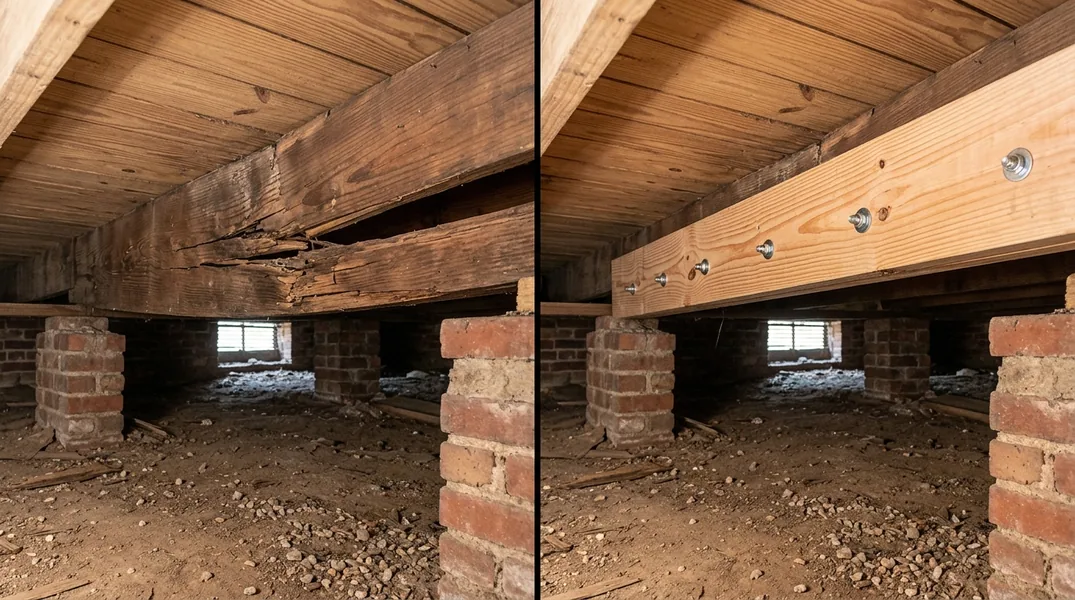
When a floor joist is compromised but not completely destroyed, Floor Joist & Subfloor Repair specialists use a technique called sistering to restore structural integrity. Sistering involves fastening a new or reinforced joist alongside the damaged one, essentially creating a doubled beam that shares the load. This method is preferred when the existing joist can still contribute some support, or when complete replacement would be excessively disruptive or costly.
The sistering process begins with careful assessment of the damage. A carpenter will measure the existing joist, determine the extent of rot or deflection, and plan reinforcement accordingly. New pressure-treated lumber or engineered beams are then cut to length and bolted or lag-screwed to the damaged joist at regular intervals, typically every 16 inches. The new member is shimmed to ensure it's in full contact with the existing joist and helps lift the floor back to a more level position. In some cases, temporary support posts are installed to hold the floor in place while work is underway, preventing further settlement.
Sistering is particularly valuable because it avoids the need to remove the existing joist entirely, which would require temporary support of the entire floor system above. However, not every sagging floor can be fixed with sistering alone. If rot is extensive, if multiple joists are affected, or if the damage extends to the rim band or beam, more comprehensive Beam Replacement & Load-Bearing Wall Removal work may be necessary. This is why a professional inspection is the crucial first step.
Floor Joist Repair Cost in Richmond: What to Budget
The pricing for sagging floor repair varies widely depending on the extent of damage, the number of joists involved, and whether rot remediation is needed. A single sistered joist might cost between $1,500 and $3,500, while more extensive repairs involving multiple joists, beam replacement, or dealing with widespread rot can easily exceed $10,000 to $20,000 or more. These figures reflect not just materials, but the expertise, temporary support systems, and careful coordination required to safely restore your home's structural integrity.
Several factors influence the final cost. The severity of rot determines whether you need spot repairs or full joist replacement. The accessibility of the damaged area matters significantly; joists in an open basement are easier to reach than those buried under finished flooring or in a cramped crawl space. The size of your home and the span of your joists affect the scope of work. Additionally, if the underlying cause of the sagging is still present, such as an active moisture problem or pest infestation, addressing that issue becomes part of the overall repair cost. A professional inspection will reveal all these factors and provide a clear estimate of what your specific situation requires.
Don't be tempted to ignore sagging floors or delay repairs. Structural problems compound over time. A floor that sags slightly today may become a serious safety hazard if left unattended. Water damage worsens, rot spreads, and the cost to repair increases substantially. Getting a free estimate from Richmond Carpentry early gives you a clear picture of what you're facing and allows you to budget accordingly.
Floor Joist & Subfloor Repair Near Me: When to Call a Professional
Homeowners sometimes wonder whether they can tackle floor joist repairs themselves. The honest answer is that while minor cosmetic fixes are possible for experienced DIYers, structural repairs to floor joists should always be handled by professionals. The reason is straightforward: mistakes in load-bearing repairs can create safety hazards for you and your family. Improper sistering, inadequate fastening, or failure to install temporary support correctly can lead to floor collapse. Additionally, building permits and inspections are typically required for structural work, and unpermitted repairs can create problems when you sell your home.
Richmond Carpentry serves the entire Richmond area with experienced carpenters who understand the unique challenges of older rowhouse construction. We begin every project with a thorough inspection using moisture meters, structural assessment, and when necessary, moisture and pest detection. We can identify not just the obvious sagging, but the root causes, whether that's rot, termite damage, or poor ventilation. Our team then develops a repair plan that restores your floor to safe, level condition while addressing the underlying problem so it doesn't happen again.
If you've noticed your floors aren't level, or if you're buying an older home and want a structural inspection before closing, contact Richmond Carpentry at (804) 593-0473 to schedule your evaluation. We'll give you honest answers about what needs to be done and what it will cost.
Prevention: Protecting Your Floors from Future Damage
Once your sagging floors have been repaired, protecting them from future damage is essential. The most important step is moisture management. Ensure your basement or crawl space has adequate ventilation, install a sump pump if water intrusion is an issue, and consider a vapor barrier under the floor system to reduce humidity. Fix plumbing leaks promptly, as even small drips can lead to rot over time. Gutters and downspouts should direct water away from your foundation, preventing moisture from wicking up into the wood framing.
Regular inspections are your best defense against hidden damage. Once a year, particularly in spring after winter thaw, walk your basement or crawl space and look for signs of moisture, discoloration, soft wood, or pest activity. Catching problems early, before they compromise structural integrity, saves money and prevents the kind of major repairs that sagging floors require. If you have concerns about your home's structural condition or want a professional assessment, Richmond Carpentry is here to help. Call us at (804) 593-0473 or visit our website to learn more about how we can protect your home's foundation for years to come.
Looking for a professional carpentry contractor in Richmond? Richmond Carpentry responds fast for all your carpentry needs.
Get a Free QuoteOur services: Wood Rot & Dry Rot Repair · Termite Damage Repair · Floor Joist & Subfloor Repair