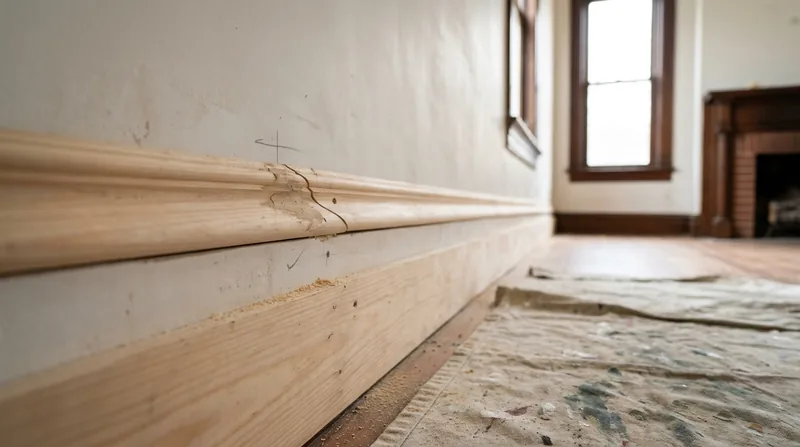




Richmond's Fan District, Church Hill, and Jackson Ward homes showcase some of the finest Victorian and Italianate architecture on the East Coast, with ornate crown molding, baseboards, and period trim that define their character. The dense rowhouses lining the tree-lined streets and the grand Colonial Revival mansions along Monument Avenue all depend on crisp, well-executed trim work to maintain their architectural integrity. Crown molding and baseboard installation in Richmond requires more than basic carpentry: it demands an understanding of period profiles, coped joints, and the exacting standards these historic homes deserve. We install crown molding, baseboards, chair rail, and window trim that either matches the existing period detail or delivers clean, modern lines, all with the precision and finish quality Richmond's architectural stock demands. Whether you're restoring a 1920s bungalow in the Museum District or updating a converted warehouse loft in Shockoe Bottom, we bring the same attention to detail and craftsmanship to every job.
Why Crown Molding and Baseboard Installation Matters in Historic Richmond Homes
Richmond's residential stock is defined by its trim work. The ornate cornices and cast-iron railings of Jackson Ward, the elaborate plaster details and heart-pine floors of Church Hill, and the Craftsman-era built-ins of the Museum District all rely on properly installed crown molding and baseboards to tie rooms together and protect walls from damage. Baseboards shield the junction between wall and floor from moisture, foot traffic, and furniture impact, while crown molding at the ceiling line conceals the gap between wall and ceiling, creates visual proportion, and provides a finished frame for any room. In Richmond's humid subtropical climate, with cold winters and occasional ice storms, poor trim installation can allow moisture to migrate behind baseboards and into wall cavities, leading to wood rot and plaster deterioration over decades. A well-executed installation with proper caulk lines and coped joints will last 50 years or more and maintain the home's resale appeal.
- We measure and cut all molding on site, scribing corners to fit the exact contours of your walls and ceiling.
- We use coped joints on inside corners rather than mitered joints, which remain tight and never open as wood seasons or the house settles.
- We fill nail holes, sand, and prime or finish all trim to match your existing interior or deliver a smooth, paint-ready surface.
- We remove and reinstall existing trim if a room is being updated, preserving original molding where it justifies the effort.
Proper installation protects your home's interior finishes and preserves the architectural character that makes Richmond's neighborhoods distinctive.
Key info: Richmond's Fan District rowhouses often feature 4- to 6-inch crown molding with dentil or egg-and-dart detail, while Church Hill Federal townhouses typically show simpler 2- to 3-inch profiles. Matching or complementing these profiles requires knowledge of the original material and an eye for proportion. We can source period-appropriate molding stock or mill custom profiles to your specification.
For more information on how trim carpentry integrates with other interior finishes, visit our finish and trim carpentry page.
How We Install Crown Molding and Baseboards in Richmond Homes
Every trim installation begins with a site visit to measure the room, assess wall and ceiling condition, and discuss your design goals. We evaluate existing trim, identify any water damage or settling that affects how new molding will fit, and recommend molding profiles that suit your home's architectural period or your modern aesthetic. We then source or mill the material, cut and fit all pieces on site, install with fasteners and adhesive appropriate to the substrate, and finish with caulk, primer, and paint or stain. The key to longevity and a professional appearance is precision at every step: walls in historic Richmond homes are rarely perfectly square or plumb, so we scribe and fit each piece individually rather than relying on standard cuts.
- We inspect walls, ceilings, and existing trim for plumb, level, and any damage that must be repaired before installation begins.
- We source molding stock that matches your home's architectural period or select modern profiles that suit your design intent.
- We cut all pieces on site with a miter saw and coping saw, scribing inside corners and fitting outside corners to the exact geometry of your room.
- We install trim with finish nails, pocket-hole fasteners, or adhesive depending on the substrate and the visual finish you want.
- We fill all nail holes, sand the trim smooth, and prime or finish to match your paint color or stain specification.
This methodical approach ensures that trim sits flush, joints remain tight, and the finished room looks built in, not added on.
Local example: A Church Hill townhouse with 9-foot ceilings and settled plaster walls required 3-inch colonial baseboards throughout the first floor and matching crown molding with a simple bed mold profile. Because the walls were out of plumb by up to 1 inch over the 12-foot length of the front room, we scribed each piece individually, coped all inside corners, and installed with finish nails set just below the surface. The result was a seamless, period-appropriate installation that looks original to the house.
For structural carpentry and framing work that may precede or complement trim installation, see our framing and structural carpentry services.
Crown Molding and Baseboard Installation Methods
| Approach | Description | Best for |
|---|---|---|
| Coped inside corners | One piece of molding is cut with a coping saw to fit the profile of the adjacent piece, creating a tight interlocking joint that remains closed as wood seasons. | All interior rooms, especially in older homes where walls settle and miter joints would open over time. |
| Mitered outside corners | Both pieces of molding are cut at 45 degrees and joined at the corner, creating a clean visual line. Requires precise angle cuts and is vulnerable to opening if the house settles. | Modern, low-movement homes with perfectly square corners and new construction where movement is minimal. |
| Scribing to irregular surfaces | Molding is fitted to match the exact contour of walls, ceilings, or floors that are out of plumb or level, using a scribe tool and coping saw to trace and cut the profile. | Historic Richmond homes where walls and ceilings have settled, warped, or are not square. |
| Pocket-hole fastening | Trim is joined with hidden fasteners drilled at an angle, leaving no visible nail holes on the face of the molding. Provides strength without surface damage. | Stained or natural-finish trim where nail holes would be visible, or where maximum structural integrity is needed. |
| Adhesive and fastener combination | Construction adhesive and finish nails work together to hold molding firmly in place, reducing reliance on fasteners alone and allowing for smaller nail holes. | Any installation where maximum durability and minimal visible fasteners are desired. |
Crown Molding and Baseboard Installation Cost in Richmond: What to Expect
Crown molding and baseboard installation in Richmond typically starts at $450 for a single room or a straightforward baseboard run in a modern home with square walls and standard profiles. The cost per linear foot varies based on the profile complexity, the condition of your walls, how many corners need to be coped, and whether existing trim must be removed and reinstalled. A 12-by-14-foot bedroom with simple colonial baseboards and no crown molding might run $600 to $900, while a larger first-floor room with both crown molding and baseboards, ornate profiles, and coped corners can easily reach $1,500 to $2,500. Factors that increase cost include custom or period-matching molding profiles, extensive scribing due to out-of-plumb walls, removal and reinstallation of existing trim, and any wall repairs needed before installation. We recommend getting 2 to 3 estimates so you can compare approach, material quality, and finish standards. For a detailed breakdown of our pricing across different scopes, visit our full pricing page.
The best way to get an accurate estimate is to call us at (804) 593-0473 with details about the rooms you want to trim, the molding style you prefer, and any existing trim you want to match. We'll respond within 24 hours and schedule a free on-site visit to measure and discuss your project.
Crown Molding and Baseboard Installation Near Me: What Richmond Homeowners Should Know When Hiring a Carpenter
Hiring a carpenter for trim work requires more than just finding someone with a saw. You want a craftsperson who understands the architectural period of your home, can read existing trim profiles and replicate them, and takes pride in coped joints and clean caulk lines. Start by asking for references from recent trim installations in Richmond, Church Hill, or the Fan District, and ask to see photographs of finished work or visit a completed job if possible. A reputable carpenter will have fully insured coverage and hold a Virginia Class B Contractor license from the Department of Professional and Occupational Regulation (DPOR), which you can verify by name and license number. Get multiple estimates so you can compare the molding profiles recommended, the installation method proposed, and the finish quality guaranteed. Ask whether the carpenter will remove and reinstall existing trim if you want to update a room, and confirm that all nail holes will be filled, sanded, and primed before your final paint or stain. For complex jobs, such as matching ornate Victorian profiles or installing trim in a home with significant settling, ask whether the carpenter has experience with historic homes and whether they recommend a site visit before quoting a price. We encourage you to contact us for a free estimate and to discuss your specific goals.
Trim work is a craft that rewards attention to detail and patience. A well-installed crown molding and baseboard job will enhance your home's value, protect your walls, and look beautiful for decades.
Crown Molding & Baseboard Installation in Richmond: Pricing Guide
| Service | Price | Details |
|---|---|---|
| Single room baseboard only | Starting at $450 | Includes measurement, material, installation, nail fill, sanding, and primer in rooms with square walls and standard profiles |
| Single room with crown molding and baseboards | Starting at $850 | Includes both trim types, coped inside corners, and finish ready for paint in a 12-by-14-foot room with standard profiles |
| Multi-room or custom profile installation | On estimate | Pricing depends on room count, molding complexity, wall condition, and whether existing trim removal and reinstallation is required |
| Removal and reinstallation of existing trim | On estimate | Cost varies by linear footage, profile complexity, and condition of original material; often justified to preserve period-appropriate trim |
| Travel and estimate | Free | No charge for a site visit and written estimate; response within 24 hours at (804) 593-0473; travel included in Richmond service area |
Indicative pricing, the exact cost depends on square footage, finish, and site access. Free personalized estimate within 24h at (804) 593-0473.


