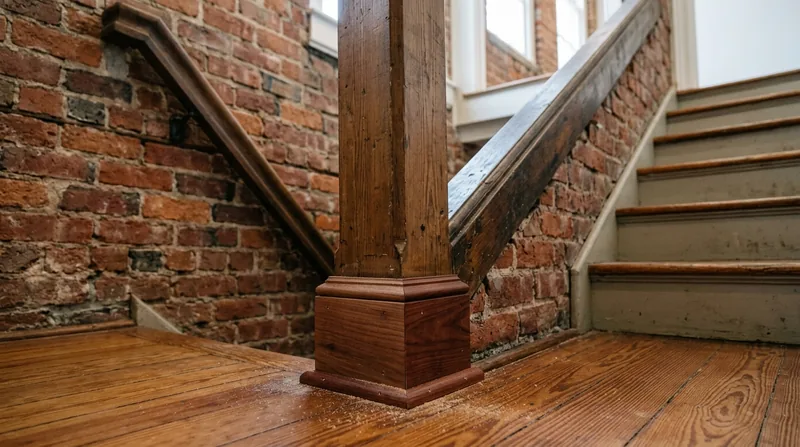




Richmond's staircases tell the story of the city itself: narrow Victorian treads in the Fan District climbing to ornate newel posts, cast-iron porch railings weathered by a century of James River humidity in Jackson Ward, grand sweeping stairs in Church Hill townhouses that have carried generations of footsteps. Stair and railing repair in Richmond is not cosmetic work. It is structural maintenance that keeps these homes safe and walkable, addressing squeaky treads, loose balusters, worn stringers, and the slow failure that comes from wood movement, moisture, and daily use. We rebuild staircases, restore period railings and cast-iron details, and install code-compliant handrails and attic access ladders for Richmond homeowners who want their stairs to work as well as they did when they were built.
Why Stair and Railing Repair Matters in Richmond's Historic Homes
Richmond's residential stock is old, dense, and vertical. The Fan District rowhouses, the Federal-era townhouses of Church Hill, the Craftsman bungalows of the Museum District, and the converted warehouse lofts of Shockoe Bottom all depend on staircases that were built to last but need maintenance to stay safe. Stairs see more movement than any other wood assembly in a house. Treads compress, stringers twist, railings loosen, and balusters work free under the repeated impact of footfall. In Richmond's hot, humid summers and occasional ice winters, wood swells and shrinks, opening gaps and stressing joints. A loose bannister or a squeaking tread is not just noise, it is a sign that fasteners are failing and the staircase is moving in ways it should not.
- We diagnose why treads squeak and why balusters loosen, then repair rather than replace whenever the wood is sound.
- We restore cast-iron porch railings and ornate newel posts that are original to Jackson Ward and Church Hill homes.
- We install code-compliant handrails and guardrails that meet current building safety standards without destroying period character.
- We repair and replace stringers that have cracked or split under load or moisture exposure.
- We rebuild attic stairs and pull-down ladder mechanisms that bind or creak.
A well-maintained staircase is a foundation of home safety and livability, especially in Richmond's older neighborhoods where stairs are central to daily movement through narrow, multi-story homes.
Key info: Stair repairs in Richmond often involve sistering (reinforcing) stringers, re-fastening treads and risers with construction adhesive and screws, and tightening or replacing baluster hardware. We work from underneath and inside the staircase where possible to avoid disrupting the finished surfaces that matter to the home's character.
For more on structural carpentry and how wood moves over time, see our framing and structural carpentry page.
How We Repair and Rebuild Richmond Staircases
Stair repair begins with understanding why a staircase is failing. A squeaking tread usually means fasteners have loosened; a wobbly bannister means bolts or lag screws have worked free or the newel post has shifted; a cracked stringer means the wood has been under stress from load or moisture. We inspect from above and below, test for movement, and check all fasteners. Once we understand the pathology, we decide whether to repair or replace. Most of the time, repair is the right answer for Richmond homes where the wood is good and the problem is mechanical.
- We remove and re-fasten loose treads and risers, using construction adhesive and stainless steel fasteners that will not rust or loosen again.
- We reinforce stringers by sistering (bolting a new piece of wood alongside the original) or by splicing in new wood where rot or splits are localized.
- We tighten or replace baluster hardware, newel post bolts, and railing fasteners, using period-appropriate methods for Victorian and Federal-era homes.
- We restore cast-iron porch railings by cleaning, repainting, and replacing missing or broken balusters while preserving the original character.
- We install new handrails and guardrails that meet current code and blend with the home's architectural style.
- We repair or replace attic stairs and pull-down mechanisms that bind, creak, or no longer close properly.
The goal is to make the staircase solid, safe, and quiet again without unnecessary replacement.
Example: A homeowner in Church Hill noticed her bannister was loose on the second-floor landing. We found that the newel post had shifted slightly, opening the lag screw holes. We tightened the bolts, shimmed the post, and drilled new holes where needed. The bannister is now solid, and the original wood was preserved. Total time: one afternoon.
Our approach is documented in detail on our wood rot and dry rot repair page, which covers the broader principles of diagnosing and repairing wood pathology in Richmond homes.
| Repair Method | Description | Best For |
|---|---|---|
| Tightening and Re-fastening | Remove treads, clean fastener holes, apply construction adhesive, and re-fasten with stainless steel screws and bolts. | Squeaky treads, loose balusters, minor movement in otherwise sound stairs. |
| Stringer Sistering | Bolt a new piece of lumber alongside a cracked or weakened stringer to share the load and restore structural integrity. | Cracked stringers, localized splits, stairs that sag or flex under normal use. |
| Stringer Splicing | Remove the damaged section of a stringer and glue and bolt in new wood, matching grain and finish to the original. | Rot or splits at the bottom of a stringer, damage localized to one area of an otherwise sound staircase. |
| Full Stringer Replacement | Remove and replace one or both stringers if damage is extensive, rot is widespread, or the wood cannot be repaired safely. | Extensive rot, multiple splits, stairs that are unsafe to use, or when splicing is not structurally adequate. |
| Railing and Baluster Restoration | Tighten hardware, replace missing or broken balusters, restore cast-iron details, and repaint using period finishes. | Loose railings, missing balusters, ornamental cast-iron railings in Jackson Ward and historic neighborhoods. |
Stair and Railing Repair Cost in Richmond: What to Expect
The cost of stair and railing repair in Richmond depends on what is broken, how much work is hidden, and whether repair or replacement is the right answer. A simple tightening of loose treads and balusters may cost as little as $600 to $1,200. A stringer that needs sistering or splicing will cost more. Full stringer replacement or extensive railing restoration will be higher. The key variables are the length and complexity of the staircase, access (interior stairs are easier than exterior porch stairs), the type of wood and finish, and whether the original hardware and details can be preserved or must be replaced.
We always give a free estimate after an on-site inspection. We measure the staircase, test for movement and rot, and explain what we find and what it will cost to fix. Most Richmond homeowners get 2 to 3 estimates so they can compare scope and price. We are happy to explain our work in detail and to answer questions about why we recommend repair over replacement or vice versa.
For a full breakdown of pricing across all our services, see our pricing page.
Stair and Railing Repair Near Me: What to Look for When Hiring a Carpenter in Richmond
Hiring the right carpenter for stair and railing repair is important because staircases are safety-critical and often visible. You want someone who understands wood movement, knows how to work with old materials, and can diagnose problems correctly. Look for a contractor who is fully insured, who will give you a free estimate in writing, and who can explain what is wrong and why they recommend a particular repair. Ask for references from past jobs in your neighborhood or in homes of similar age and style. If your staircase is in a historic district or subject to HOA design review, make sure the contractor understands those constraints before you sign a contract.
- Check that the contractor is fully insured and carries liability coverage that protects your home during the work.
- Get the estimate in writing, including a description of the work, the materials to be used, and the timeline.
- Ask whether the work requires a permit and whether the contractor will obtain it or whether you will handle it yourself.
- Request references from recent jobs in Richmond, especially in historic neighborhoods like the Fan, Church Hill, or Jackson Ward.
- Discuss how the contractor will preserve or match original finishes, hardware, and architectural details if your home is older.
- Understand the payment terms: a reasonable deposit to secure the job, payment upon completion, and no pressure to pay before the work is done.
For stair work that involves structural changes, such as altering the rise and run of treads or moving a staircase, a permit is commonly required. The Richmond building department can advise on whether your project needs one. We can help coordinate with the building department and ensure the work meets current code.
Ready to get started? Contact us for a free estimate at (804) 593-0473. We respond within 24 hours and will be happy to walk through your staircase and explain what we find.
Stair & Railing Repair in Richmond: Pricing Guide
| Service | Price | Details |
|---|---|---|
| Tightening and re-fastening loose treads and balusters | Starting at $600 | Includes inspection, removal and cleaning of treads, application of construction adhesive, and new stainless steel fasteners |
| Stringer sistering or splicing | Starting at $1,200 | Reinforcing or replacing a section of a stringer depending on the extent of damage and the length of the staircase |
| Full stringer replacement or extensive railing restoration | On estimate | Requires on-site inspection to measure, assess wood condition, and determine whether repair or full replacement is appropriate |
| Handrail or guardrail installation | Starting at $400 | Code-compliant installation of new handrails or guardrails, including brackets, fasteners, and finishing to match existing trim |
| Travel and estimate | Free | Included in Richmond and surrounding areas, no separate mileage fee or charge for the initial consultation and written estimate |
Indicative pricing, the exact cost depends on square footage, finish, and site access. Free personalized estimate within 24h at (804) 593-0473.


