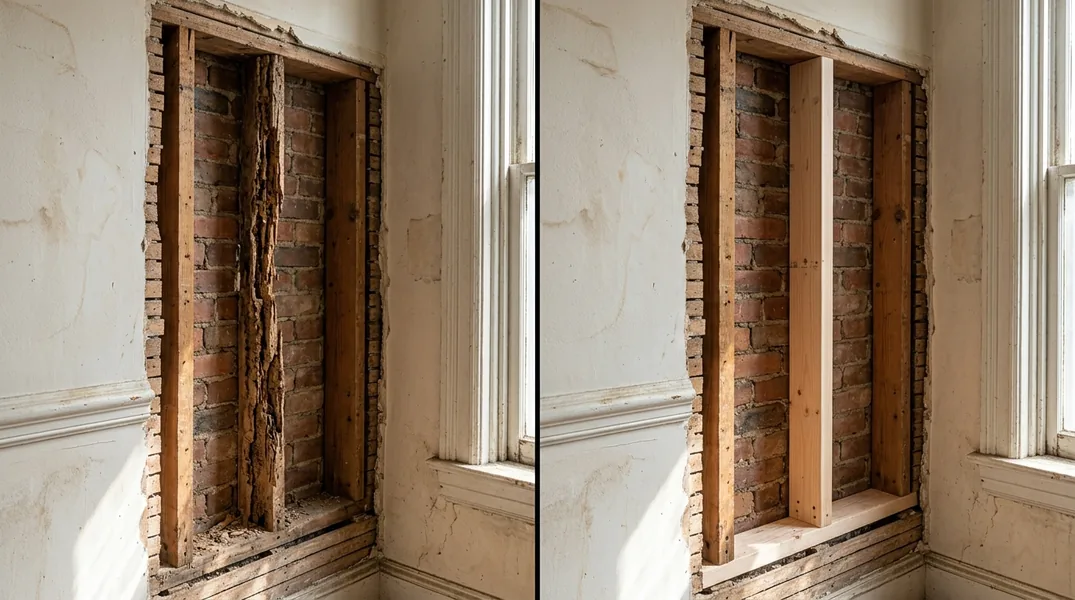
Why Richmond Homeowners Need to Know the Difference
If you own a rowhouse in Richmond, you've probably worried about wood damage at some point. The region's humid climate and older housing stock create the perfect storm for structural problems. But here's the thing: not all wood deterioration looks the same, and misidentifying the problem could lead you down an expensive repair path that doesn't actually solve your issue.
Dry rot and termite damage are the two most common culprits behind failing wood in Richmond homes, yet they require completely different treatment approaches. Dry rot is a fungal decay that spreads through moisture, while termites are living insects that actively consume wood fiber. Understanding which one you're dealing with is the first step toward protecting your home and your wallet. That's why we've put together this guide to help you spot the difference before calling in a professional.
What Does Wood Rot Look Like? Identifying Dry Rot Damage
Dry rot, despite its name, actually requires moisture to develop. It's a fungal infection that thrives in damp, poorly ventilated areas of your home. The most obvious sign of dry rot is wood that appears shrunken, darkened, and brittle. If you press a screwdriver or your fingernail into affected wood, it will crumble or splinter rather than resist. The wood often takes on a dark brown or gray color, and you might notice it's pulling away from surrounding surfaces or creating visible gaps.
Another telltale indicator of dry rot is the presence of mycelium, which looks like fine, thread-like growths or a cotton-like coating on the wood surface. In advanced stages, you may also see fruiting bodies that resemble mushroom caps. The affected wood becomes extremely weak and can eventually collapse under normal weight. Common locations for dry rot in Richmond rowhouses include basement joists, bathroom subfloors, and areas around windows where water infiltration occurs. If you suspect dry rot, Wood Rot & Dry Rot Repair should be your priority to prevent further structural compromise.
Signs of Termite Damage in Wood: What to Look For
Termite damage presents quite differently from dry rot, though the end result can be equally devastating to your home's structural integrity. Unlike dry rot, termite damage often occurs without obvious external signs until the infestation is severe. Termites work from the inside out, leaving behind thin outer shells of wood while hollowing out the interior. This means a wooden beam or floor joist can look perfectly fine on the surface but be completely compromised underneath.
When you do see visible termite damage, the wood typically has a honeycomb-like appearance with galleries or tunnels running through it. The wood may feel papery or sound hollow when tapped. You might also notice mud tubes (pencil-thin tunnels made of soil and termite saliva) running along foundation walls or wooden supports. Termite droppings, which look like tiny pellets or sawdust, often accumulate near infested wood. Unlike dry rot, termites leave behind a trail of sawdust-like frass that can help you pinpoint their activity. If you spot any of these signs, Termite Damage Repair requires immediate professional attention to stop the colony from spreading.
Key Differences: Dry Rot vs Termite Damage
Understanding the core differences between these two problems is essential for proper diagnosis. Dry rot is a fungal disease that spreads through moisture and poor ventilation. It doesn't spread as quickly as a termite infestation, but it can still cause catastrophic structural failure if left untreated. The wood affected by dry rot becomes brittle and crumbly, and the problem is confined to areas with moisture issues. Once you address the moisture source, you can stop dry rot from advancing further.
Termite damage, by contrast, is caused by living insects actively feeding on cellulose in wood. Termites can spread rapidly throughout a structure, moving from one wooden element to another. They're particularly dangerous because they can travel through mud tubes and soil, meaning they can access wood that isn't even in direct contact with the ground. The damage pattern is different too: termites create galleries and tunnels, whereas dry rot causes the wood to shrink and crumble. Additionally, termites are active year-round in Virginia's climate, while dry rot typically accelerates during warmer, wetter months. For homeowners trying to distinguish between the two, the presence of mud tubes, active insects, or that distinctive papery texture usually points to termites, while crumbling wood and a musty smell typically indicate dry rot.
When to Call a Professional: Wood Rot & Dry Rot Repair Near Me
While some homeowners attempt DIY repairs for minor wood issues, both dry rot and termite damage typically require professional intervention. The reason is simple: what you see on the surface is rarely the full extent of the problem. Wood rot can hide inside walls and under flooring, spreading silently through structural elements. Termite colonies can extend far beyond the visible damage, with workers tunneling through multiple rooms or even into your attic. Without proper inspection and treatment, you risk incomplete repairs that leave your home vulnerable to future damage.
A professional inspection will identify the full scope of damage and recommend the appropriate repair strategy. For dry rot, this might involve removing affected wood, treating the area with fungicide, and addressing the underlying moisture problem. For termites, it typically requires both immediate removal of infested wood and ongoing pest management. If you're in Richmond and suspect either problem, reaching out for a free estimate is the smartest first step. Richmond Carpentry can assess your situation, identify which problem you're facing, and provide a clear path forward.
Common Locations in Richmond Rowhouses Where These Problems Occur
Richmond's historic rowhouses are particularly vulnerable to both dry rot and termite damage due to their age and construction methods. Dry rot frequently appears in basements and crawl spaces where moisture accumulates from poor drainage or groundwater seepage. Bathroom subfloors are another common trouble spot, especially in older homes where plumbing leaks go unnoticed. Window frames and door sills are also susceptible, particularly on north-facing walls that receive less direct sunlight and dry more slowly after rain. Any area with chronic moisture issues becomes a potential breeding ground for fungal decay.
Termites, meanwhile, are attracted to Floor Joist & Subfloor Repair areas and wooden elements in contact with soil. Foundation sills, the wooden rim joists that sit on top of your foundation, are prime targets. Termites also love to attack wooden posts in basements, deck support beams, and any wood that bridges the gap between the ground and your home's structure. Even though rowhouses are built close together, each home's termite risk is independent. A neighbor's infestation doesn't automatically mean you have one, but it's worth being extra vigilant about inspections. If you notice soft wood, sagging floors, or that characteristic musty smell in your basement, don't wait to investigate further.
What to Budget for Repairs in Richmond
The pricing for wood rot and termite damage repairs varies significantly based on the extent of the damage and the structural elements involved. A small, localized dry rot repair might cost a few hundred dollars, while extensive rot affecting multiple floor joists or Beam Replacement & Load-Bearing Wall Removal could run several thousand. Termite damage repair costs similarly depend on how widespread the infestation is and which structural components require replacement.
The key to managing costs is early detection. A small area of dry rot caught early is far cheaper to repair than waiting until the problem spreads throughout your basement. Similarly, termites discovered in their early stages can be treated with less extensive wood replacement. This is why annual inspections are so valuable for Richmond homeowners. Rather than facing a surprise repair bill for extensive damage, you can address problems when they're manageable. To understand your specific situation and get an accurate estimate for your home, contact Richmond Carpentry at (804) 593-0473 or request a free estimate online.
Looking for a professional carpentry contractor in Richmond? Richmond Carpentry responds fast for all your carpentry needs.
Get a Free QuoteOur services: Wood Rot & Dry Rot Repair · Termite Damage Repair · Floor Joist & Subfloor Repair